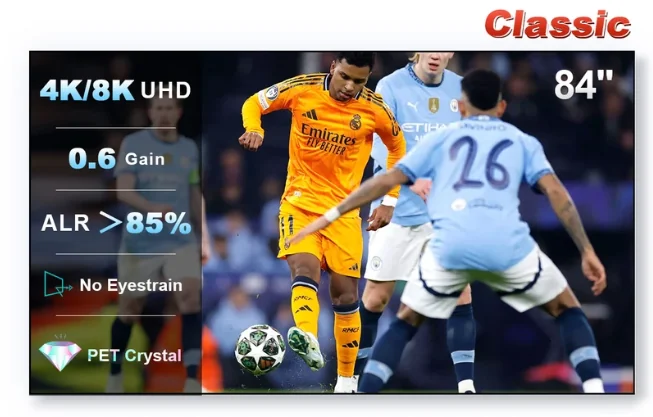
Bottom line: the PET Crystal Classic is positioned as a value-oriented fixed-frame ALR screen for ultra-short-throw projectors. The current merchant listing states 85% ambient-light rejection, 0.6 gain, a 160° viewing angle and size options from 100 to 150 inches. Those figures make the product worth investigating for a living-room UST setup where a permanent frame is acceptable.
What the published specifications mean
85% ALR: the merchant says the screen is engineered to reject ambient light arriving from directions other than the UST projector. In practice, the useful question is not the percentage alone; it is where your windows and lights are relative to the screen and how much light reaches the viewing surface.
0.6 gain: a gain below 1.0 typically trades some peak reflected brightness for more controlled light distribution and improved perceived black level in the intended geometry. Your projector's usable brightness and room conditions still matter.
160° viewing angle: this is a merchant-stated figure. Wider seating can benefit from a broader viewing cone, but optical screen performance can still look different from center seat to far off-axis positions.
Where this screen fits best
- You use an ultra-short-throw projector placed close to the screen.
- You want a fixed, tensioned screen rather than a retractable mechanism.
- Your room has meaningful ambient light and you want a screen designed to control it.
- You are comparing value-oriented ALR options rather than treating the screen as an afterthought.
Where to slow down
If you rent, need the wall clear when the projector is off, require acoustically transparent material, or have unusual speaker placement, a fixed frame may create constraints. Likewise, a very bright room with strong light striking the screen from difficult angles may push you toward more aggressive light-rejection designs or better light control.
Size and variant considerations
The current fixed-frame listing we reviewed advertises 100, 110, 120 and 150-inch selections. The user-supplied promotional image used across this site contains an 84-inch label, so treat the image as promotional rather than a definitive size chart. Confirm the exact variant before ordering.
Compatibility
The merchant describes the product as UST-only and names brands including Hisense, AWOL Vision and BenQ; a global listing also names XGIMI Aura. Brand-level compatibility does not remove the need to verify your projector model's placement geometry and the required vertical offset for your chosen image size.
See the NothingProjector PET Crystal Classic offer
Check current price, size availability and merchant terms before ordering.
Check Current OfferAffiliate link: we may earn a commission if you buy through this link, at no extra cost to you.
Keep researching
PET Crystal vs Fresnel
Compare the two screen-surface approaches.
100 vs 120 inches
Check the room impact of common screen sizes.
Classic vs Black Series
Compare NothingProjector's published screen positioning.