Choose the right screen for your ultra-short-throw projector.
Clear, independent guides to ALR screen technology, gain, sizing, room lighting and the NothingProjector PET Crystal Classic—without pretending every setup needs the same screen.
We may earn a commission when you use our merchant links.
Three questions narrow the field quickly
Is the room bright?
Ambient light can wash out contrast. Learn when a directional ALR surface is useful and when better light control may be enough.
What size actually fits?
Work backward from room width, viewing distance and the projector's geometry instead of choosing inches first.
PET crystal or Fresnel?
Compare two common UST-screen approaches by viewing cone, light rejection behavior, installation and practical trade-offs.
NothingProjector PET Crystal Classic
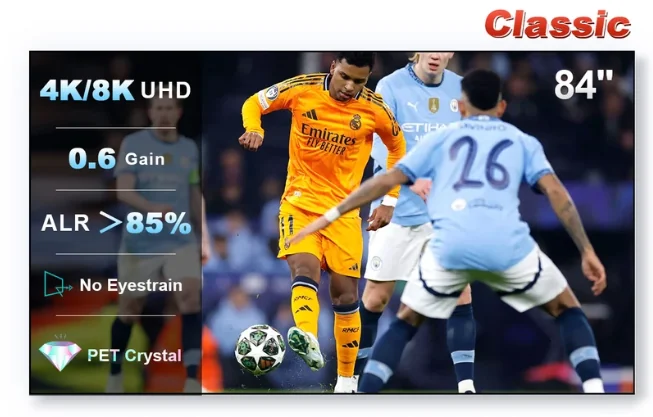
The merchant currently positions the fixed-frame PET Crystal Classic as a UST-only screen with 85% ambient-light rejection, 0.6 gain and a 160° viewing angle. Our guides separate those published specifications from the room and installation factors that determine whether they matter for you.
Explore the screen ecosystem
Screen Technology
ALR, CLR, PET crystal, Fresnel, gain and why UST geometry changes screen behavior.
Setup & Sizing
Size, mounting, fixed-frame decisions and avoiding geometry mistakes.
Buying Guides
Bright-room choices, screen-vs-wall decisions and buyer checklists.