1. Confirm it is UST-specific
This is the non-negotiable first filter. An ALR screen designed for standard throw may reject the very light your UST projector is trying to send toward the audience.
2. Map the unwanted light
Note whether the dominant ambient light comes from ceiling fixtures, side windows, reflected walls or a combination. Light direction matters because ALR screens are directional optical surfaces.
3. Check gain against projector output and screen size
A lower-gain screen can improve perceived contrast in the right room, but you still need enough projector output for the image size you want.
4. Protect the seating area
A screen that looks excellent in the center seat but falls off at the edge of a wide sectional may be the wrong fit. Published viewing-angle figures help, but real room geometry still matters.
5. Choose fixed or retractable
Fixed frames are simple and can maintain a very flat surface. Floor-rising and drop-down screens preserve the wall but add mechanical complexity and usually cost more.
6. Verify the exact size
Do not assume your projector can produce the same vertical offset at every screen size. Check the projector manual before drilling or ordering.
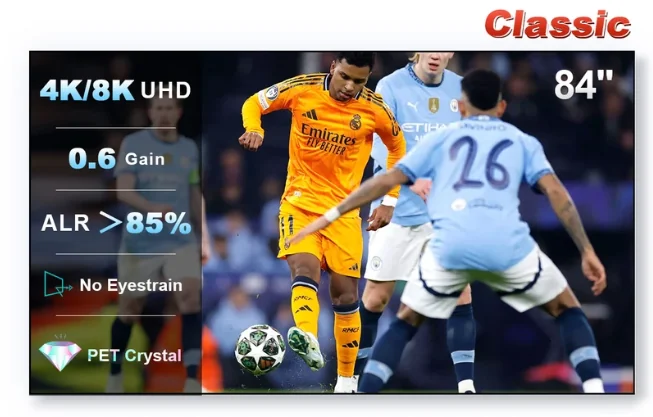
Compare the PET Crystal Classic
It is one UST-specific fixed-frame option with merchant-stated 85% ALR and 0.6 gain.
Check Current OfferAffiliate link: we may earn a commission if you buy through this link, at no extra cost to you.
Keep researching
Bright-room guide
Assess ambient-light constraints.
100 vs 120 inches
Choose a realistic image size.
PET crystal vs Fresnel
Compare screen technologies.