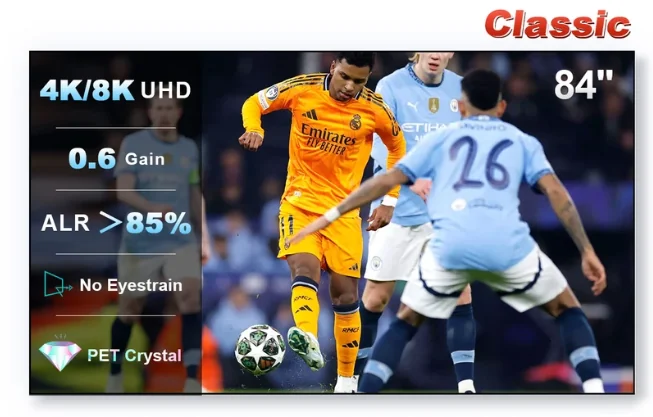
A gain number is a brightness-distribution clue, not a quality score. A screen around 1.0 gain is often used as a reference point. Lower-gain ALR surfaces may reflect less peak light while helping control stray light and perceived black levels in the intended viewing geometry.
What 0.6 gain can mean in practice
The PET Crystal Classic is currently listed at 0.6 gain. That makes projector brightness, image size and room light important parts of the decision. As image size increases, the same projector output is spread across a larger area.
Higher gain is not always better
Higher gain can increase brightness toward favored viewing directions but may narrow uniformity or make hotspots more noticeable depending on screen structure. The best screen balances projector output, seating and light control.
Combine gain with three other specs
- Projector type and throw geometry
- Viewing angle or viewing cone
- Ambient-light rejection behavior
See the NothingProjector PET Crystal Classic offer
Check current price, size availability and merchant terms before ordering.
Check Current OfferAffiliate link: we may earn a commission if you buy through this link, at no extra cost to you.
Keep researching
How ALR works
Connect gain with directional reflection.
Screen size guide
See how larger images spread available light.
PET Crystal review
Apply gain to the featured product.